
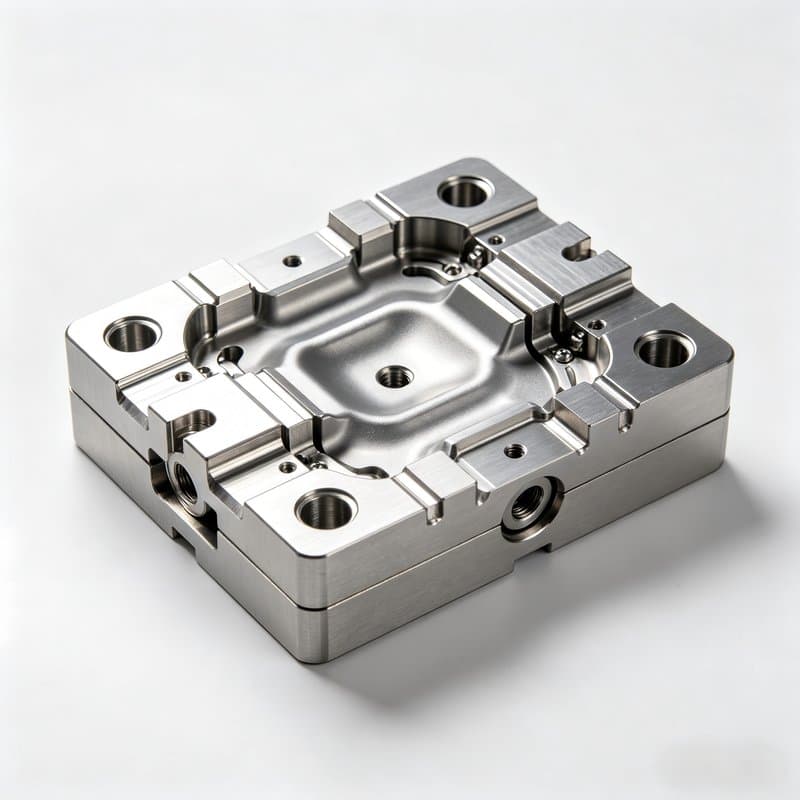
Aluminum Rotational Molds
At Luban, every mold is designed in-house using CAD software, machined on our own CNC equipment, and tested in our production line before being cleared for client orders. We work in aluminum for the majority of molds — it machines quickly, conducts heat evenly, and lasts for hundreds of thousands of cycles when properly maintained.
| Mold Material | Cast aluminum · Machined billet aluminum · Mild steel |
| CNC Capability | 3-axis (medium and large) · 5-axis (complex geometry) |
| Max Part Size | Up to 3,000 mm in any single dimension |
| Standard Lead Time | 4–6 weeks from approved CAD drawing |
| Sample Lead Time | 1–2 weeks after mold completion |
| Surface Finish | Smooth · Textured · Sandblasted · Custom logo |
| Compatible Materials | LLDPE · HDPE · Cross-linked PE · PVC · Nylon |
| Certification | ISO 9001 — dimensional inspection on every mold |
- Designed and machined on-site — no third-party toolmakers, no miscommunication
- Uniform heat distribution for consistent wall thickness
- Tight dimensional tolerances maintained through CNC
- In-house mold testing before first production run
- Long mold lifespan: 200,000+ cycles with proper maintenance
Choosing the Mold Material
Which metal a tool is cut from is mostly a geometry and cost decision. Cast aluminum suits large, straightforward shells; machined billet aluminum holds finer detail and tighter tolerance on complex geometry, which is where the 5-axis capability earns its place; mild steel is used where the part calls for it. All three are cut in our own tool room from an approved CAD drawing, run and tested on our production line before release, and dimensionally inspected under ISO 9001. With routine maintenance an aluminum tool stays in service past 200,000 cycles. Surface treatment — smooth, textured, sandblasted, or an embossed logo — is cut into the tool itself, so it repeats on every part instead of being added as a secondary operation.
Choosing the Mold Material
Which metal a tool is cut from is mostly a geometry and cost decision. Cast aluminum suits large, straightforward shells; machined billet aluminum holds finer detail and tighter tolerance on complex geometry, which is where the 5-axis capability earns its place; mild steel is used where the part calls for it. All three are cut in our own tool room from an approved CAD drawing, run and tested on our production line before release, and dimensionally inspected under ISO 9001. With routine maintenance an aluminum tool stays in service past 200,000 cycles. Surface treatment — smooth, textured, sandblasted, or an embossed logo — is cut into the tool itself, so it repeats on every part instead of being added as a secondary operation.
This page covers one line in detail. The product hub sets out the full manufacturing envelope — materials, size and weight limits, tolerances, tooling options and lead times — across all four lines.
Ready to Start Your Project?
Send us your requirements. We respond within 24 hours.