
How PU foam-filled double-wall rotomolded parts work, when to choose them over a single wall, and what the OEM mold and drawing must allow for.
The short version: A PU foam-filled rotomolded part is a seamless double-wall shell whose cavity is injected with polyurethane foam after molding. Luban Rotomold in Dongguan runs this in-house: the OEM molds are machined on its own 3-axis and 5-axis CNC equipment, the shells are molded on its own floor and the foam is injected on its own foam line. It uses the construction today on insulated cooler boxes and on double-wall battery enclosures, and offers it on custom OEM parts. The decision that matters most for the mold is made first: single wall or double wall.
Buyers who search for a PU foam OEM rotomold mold are usually not looking for a mold on its own. They have a part that has to keep something cold, keep a battery at a steady temperature, stay stiff over a large flat area or float if it goes overboard, and they want to know whether a rotomolder can tool it, mold it and fill it without passing the job between three suppliers.
This guide explains how foam-filled double-wall rotomolding works, what the foam adds to the part, how a foam-filled design changes the OEM mold, and what to put on the drawing. Where it describes the process in general, it says so. Where it quotes figures, they are the ones Luban Rotomold publishes on its own product, process and news pages, so you can check them against your part.
What is a PU foam-filled rotomolded part?
In rotational molding, plastic powder is loaded into a hollow mold, the mold is heated while it rotates slowly about two axes, and the melting powder coats the inside of the mold to form the wall. A double-wall part is designed so that the molded shell has an outer skin and an inner skin with a closed cavity between them. The whole shell still comes out of the mold as one seamless piece.
Foam filling is the next step. Polyurethane is injected into that cavity as a liquid, expands and cures into a rigid foam core that is bonded between the two skins. In general terms, the result behaves like a sandwich panel: two plastic skins held apart by a lightweight core. Luban describes this as foam-filled molding and lists it among its core capabilities: in-house double-wall PU foam injection, run on the same OEM rotomold molds it machines itself.
Injected foam, not an insert: On its cooler boxes, Luban states that the cavity between the walls is filled with injected polyurethane foam on its own line rather than fitted with a slide-in insert. That is the distinction to look for when comparing suppliers: whether the foam is injected into a closed molded cavity, or an insulation panel is fitted into an open shell afterwards.
Why fill a double wall with foam?
Luban's own pages credit the foam-filled structure with three things: thermal insulation, rigidity and, in marine use, buoyancy. Each one comes from the foam core and the closed double-wall shell working together rather than from a coating applied afterwards.
- Thermal insulation: the foam core slows heat transfer between the outside and the inside. Luban's cooler boxes rely on it for their ice retention, and its battery enclosure article says the foam-filled version minimises battery temperature fluctuations and helps prolong cell life.
- Rigidity: Luban's OEM guidance names insulation or extra rigidity as the reasons to choose a double-wall, foam-filled part. A foam core bonded between two skins stiffens large walls and lids that would flex as a single skin.
- Buoyancy: for marine operations, Luban's battery enclosure article notes that the double-wall foam-filled structure provides natural buoyancy, so the enclosure does not sink instantly if dropped in water.
- A seamless shell around the foam: the outer and inner skins are one molded piece, so there is no bond line between two halves for heat to travel through and no glued seam to split under impact.
Single wall or double wall: how do you choose?
Not every part benefits from foam. Luban's battery enclosure article sets out the trade-off clearly for its two structures, and the same logic applies to most OEM parts. A single-layer part gives the most internal volume, the lowest weight and the fastest heat dissipation. A double-wall foam-filled part gives up some internal volume and adds weight and a process step, in exchange for insulation, stiffness and buoyancy.
| Factor | Single-layer rotomolded part | Double-wall PU foam-filled part |
|---|---|---|
| Wall construction | One molded skin | Outer and inner skin molded as one shell, foam core injected between them |
| Internal volume | Maximum for the outside size | Reduced by the inner skin and the foam layer |
| Weight | Lightest | Heavier, because of the second skin and the foam |
| Heat behaviour | Dissipates heat from the contents | Insulates the contents from outside temperature |
| Stiffness of large panels | Set by wall thickness and ribs | Raised by the bonded foam core |
| Behaviour in water | Depends on the sealed air inside | Foam gives natural buoyancy (Luban, battery enclosures) |
| Process steps | Molding, then finishing | Molding, foam injection, then finishing |
| Typical Luban use | Outdoor cabinets, heavy machinery and AGV battery boxes | Insulated cooler boxes, insulated battery enclosures |
The table compares the two constructions in general and as Luban describes them for its battery enclosures. The right choice depends on what the part has to do. If the contents generate heat that has to escape, a single wall is usually the better start. If the contents have to be protected from outside temperature, or the part has to stay afloat, a foam-filled double wall is the stronger case.
How does a foam-filled design change the OEM mold?
This is the point many buyers miss. Whether a part is single wall or double wall is not a process setting that can be switched on later. The double-wall geometry, with its inner skin and closed cavity, is designed into the mold. Luban's OEM guidance says it plainly: say early whether the part is single or double wall, because it changes the mold design rather than just a process setting.
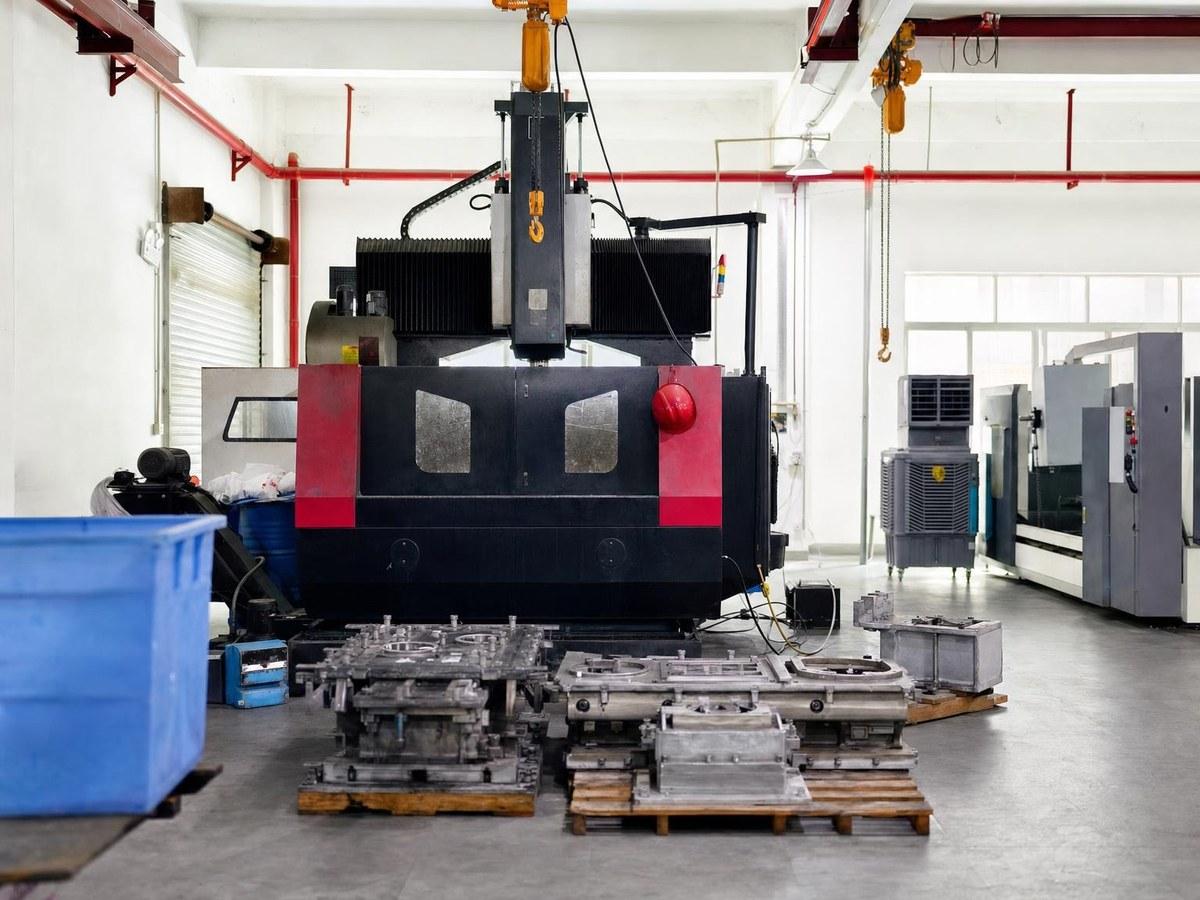
Luban machines its molds in-house from cast aluminum, machined billet aluminum or mild steel on 3-axis and 5-axis CNC equipment. It states that the choice between them depends on part size, detail and run length, and advises on it for each drawing. It states that mold life depends on the mold material, the part and maintenance, and gives a tooling lead time of 4-6 weeks, or 6-8 weeks for complex geometry, from approved CAD. Every mold leaves with a dimensional inspection under its ISO 9001 system.
As general practice, a few features of a foam-filled part need to be agreed while the mold is being designed rather than after the first sample:
- Which walls are double and which are single. A cooler body and lid may both be foamed; a housing may only need foam in the panels exposed to sun or cold.
- Where the foam goes in and where air comes out. Fill and vent openings end up on the finished part, so mark the faces where they are acceptable and the faces where they are not.
- The gap between the skins. It sets how much foam the wall carries and therefore how much insulation and stiffness it can give, and it takes internal volume from the part.
- Inserts and fixing points. Metal inserts such as studs, mounting brackets and reinforcing plates can be placed in the mold before the cycle; their positions must be compatible with the foamed cavity.
- Openings cut after molding. A hole trimmed or drilled through a double wall passes through foam, so its position and edge treatment belong on the drawing.
Decide single or double wall before machining starts: Changing a single-wall design to a foam-filled double wall after the mold is cut usually means reworking the tool, not changing a setting. If you are unsure which the part needs, ask for both options to be reviewed at the drawing stage, when Luban's engineers assess geometry, material and volume before quoting.
Where does Luban use foam-filled double walls today?
Two product families on Luban's site are built this way, and both show what the construction is for. The first is the insulated cooler box line. The second is the double-wall version of its PE battery enclosures for energy storage, marine and off-grid systems. Custom OEM parts can use the same construction: Luban lists foam filling among the secondary operations on its OEM parts page, alongside CNC trimming, drilling, welding and assembly.
Insulated cooler boxes
Luban's cooler boxes are rotomolded as one seamless double-wall shell in food-safe, UV-stabilized LLDPE, and the cavity is filled with injected PU foam on the factory's own foam line. Luban contrasts this with an injection-molded cooler, which is usually two halves joined together. The specification below is the one published on the cooler product page.
| Item | Luban's published specification |
|---|---|
| Shell material | LLDPE, food-safe, UV-stabilized |
| Insulation | Injected PU foam |
| Capacities | 20L, 35L, 50L, 75L, 100L, 150L, or custom |
| Ice retention | 72 hours under standard conditions |
| Color | Custom color matching to RAL or Pantone |
| MOQ | 50 units, samples available |
| Lead time | Tooling 4-6 weeks, production 3-4 weeks |
Luban notes that the injected foam is why capacity can move across the 20L-150L range, or to a custom volume, without changing supplier. Logos are embossed into the mold so that branding weathers at the same rate as the shell, and Luban also lists custom colors and printed lids as branding options.
Ask how an insulation figure was measured: Ice retention depends on box size, how much ice goes in, whether the box was pre-chilled and how often the lid opens. When you compare foam-filled products from any supplier, ask for the test conditions behind the figure for the exact size you are ordering, and test your own samples the same way before you print a number on packaging.
Double-wall battery enclosures
Luban's battery enclosure article describes two structures: a PE single-layer battery box for maximum internal volume, low weight and faster heat dissipation, and a double-wall hollow structure whose core is injected with polyurethane foam. For the double-wall version it cites thermal insulation that minimises battery temperature fluctuations and, in marine operations, natural buoyancy. Options listed for these enclosures include UL94-V0 flame-retardant LLDPE, cross-linked polyethylene (XLPE), molded-in stainless-steel threaded inserts, integrated sealing slots, waterproof cable-entry platforms, heavy-duty lifting bases and stainless-steel latches.
What can the shell around the foam be made of?
The foam is only as good as the shell that holds it. For OEM work Luban lists LLDPE, HDPE, cross-linked PE (XLPE), PVC and nylon (PA), a maximum part size of 3,000 mm in any single dimension and a part weight range of 0.5 kg to 250 kg. Shell wall thickness runs from 3 to 18 mm and can be adjusted without building a new mold, and dimensional tolerance is stated at ±1% or better on high-tolerance OEM work. Color is matched to RAL or Pantone with masterbatch mixed into the material, so it runs through the wall.
Luban's FAQ describes rotomolded parts as seamless, hollow and stress-free, and notes that the process deposits more material at the outer corners most exposed to impact. On a foam-filled part, that tough outer skin is what protects the foam core from knocks, sunlight and water.
What should a foam-filled OEM drawing say?
A foam-filled part only appears correctly in a quote if the drawing explains it. Luban accepts STEP, IGES, DWG and PDF files or a hand sketch, and builds a free 3D concept model if no CAD is available. Before you send, check that the drawing or brief states:
- Which walls are double and foam-filled, and which stay single.
- What the foam is for: insulation, stiffness, buoyancy, or a combination, plus any target you need the part to meet and how you will test it.
- The outer dimensions that must hold, and the internal clearance the contents need after the inner skin and foam are in place.
- Faces where fill and vent openings are acceptable, and faces that must stay clean.
- Every metal insert with its type, thread and position, and whether it is molded in or installed after molding.
- Openings, drilled holes, welded fittings and assembly steps that pass through or attach to a foamed wall.
- Shell material, color reference (RAL or Pantone), surface finish and any logo artwork.
- Quantity per order and expected annual quantity.
Send CAD by email: Luban asks for CAD attachments to go to sales@lubanrotomold.com rather than through the web form. A preliminary quote comes back within 24-48 hours of receiving drawings or a description.
What happens after the foam goes in?
Luban's position is that parts should leave the factory finished rather than needing a second supplier. After molding and foam injection, its in-house secondary operations include CNC trimming, drilling, welding, insert installation and component assembly, and its FAQ adds flame treatment and anti-static coating. For a foam-filled part this matters more than usual: cutting, drilling and fitting hardware through a foamed wall is easier to control when the same team that molded and foamed the part does the finishing, inside one quality system.
During production runs Luban states that dimensional checks, ultrasonic wall thickness measurements and visual inspections are carried out under its ISO 9001:2015 quality system, and that every batch ships with an inspection report. As general practice for foam-filled parts, also ask a supplier how it checks that the cavity is fully filled, since the foam cannot be seen once the part is finished.
How long does a foam-filled OEM project take?
| Stage | Luban's published figure |
|---|---|
| Preliminary quote | Within 24-48 hours of receiving drawings or a description |
| Mold manufacturing | 4-6 weeks standard, 6-8 weeks for complex geometry, from approved CAD |
| Sampling | 1-2 weeks after mold completion; a small number of samples per design |
| Production | 3-4 weeks after written sample approval |
| Shipping | Sea 25-35 days to the US or EU; air 7-14 days |
Luban states that full production starts only after your written sign-off on a physical sample, and that mold adjustments are free if a sample deviates from the agreed specification. For a foam-filled part, the sample is the moment to test what the foam is there for: put it in the cold room, the sun or the water tank before you approve it. OEM minimums start from 50 units, varying by part size, and cooler boxes are 50 units with samples available.
Ask whether your part should be foam-filled
Send a drawing, sketch or description with your quantity and what the part has to do. Luban Rotomold returns a preliminary quote within 24-48 hours and confirms single or double wall, foam, size, tolerance and lead time against your actual part.
What is a PU foam-filled rotomolded part?
A rotomolded part with a double wall, an outer and an inner skin molded as one seamless shell, whose cavity is injected with polyurethane foam after molding. The foam cures into a rigid core between the skins. Luban Rotomold does the molding and the foam injection in-house in Dongguan.
Does Luban make the OEM mold for a foam-filled part?
Yes. Luban machines its molds in-house from cast aluminum, machined billet aluminum or mild steel on 3-axis and 5-axis CNC equipment, and runs double-wall PU foam injection on the same molds. Tooling takes 4-6 weeks from approved CAD, or 6-8 weeks for complex geometry.
Can a single-wall mold be used for a foam-filled part later?
Usually not without rework. The double wall, with its inner skin and closed cavity, is designed into the mold, so Luban advises saying early whether a part is single or double wall. Decide before machining starts, or ask for both options to be reviewed at the drawing stage.
What does the foam add to a rotomolded part?
Thermal insulation, rigidity and buoyancy. Luban's coolers rely on the foam for ice retention, its battery enclosure article credits the foam-filled version with steadier battery temperatures and, in marine use, natural buoyancy, and its OEM guidance names insulation or extra rigidity as the reasons to choose a double wall.
How thick is the foam in Luban's cooler boxes?
The cooler product page lists injected PU foam in a seamless double-wall LLDPE shell, with ice retention of 72 hours under standard conditions. Ask for the test conditions behind that figure for the size you are ordering, and test your own samples the same way.
What is the minimum order for a foam-filled OEM part?
Luban's OEM minimum is from 50 units, varying by part size, and its cooler boxes are 50 units with samples available. Before production it makes first-article samples, and full production starts only after your written approval of a physical sample.