
Rotomold mold finishes from a China manufacturer: sandblasted, textured, Teflon, high-gloss, embossed logo, plus a stated 200,000+ cycle life.
The short version: Luban Rotomold lists five finishes for its rotomold molds: sandblasted, textured (including automotive-quality patterns), Teflon-coated, high-gloss polished and embossed logo. The finish is chosen from the end product's visual and functional requirements, so it belongs in the RFQ, not in a change request after the tool is cut. Molds are mostly aluminum, CNC-machined in-house on 3-axis and 5-axis equipment, tested on Luban's own production line before client orders, and the molds page states a service life of 200,000+ cycles with routine maintenance.
When buyers compare quotes from a rotomold mold manufacturer in China, the surface finish is often a single word on the quote: "textured" or "smooth". Yet the finish decides what the end user sees and touches, how visible the parting line is, how much trimming each part needs and how the tool should be cared for over its life. A finish that suits a hidden machine housing can look poor on a branded cooler lid, and a high-gloss face shows marks that a matte face hides.
This guide covers the finishes a rotomold mold can carry, how to match a finish to the part, why machined parting lines matter for a clean surface, and what sits behind a stated service life. Mold type and material are covered in our earlier guide to choosing a rotomold mold type, so here they appear only where they affect the surface. Where a point is general industry practice rather than something Luban states, the text says so.
Which mold finishes does a rotomold mold manufacturer in China offer?
Luban's capability table lists sandblasted, textured, Teflon-coated, high-gloss polished and embossed logo finishes, and its molds page also names a smooth finish. Its technical FAQ describes the texture options as automotive-quality patterns and states that the finish is selected based on the end product's visual and functional requirements. Sandblasting and shot-blasting are done in-house for mold preparation and surface treatment. The table summarizes each option; the typical uses and the items to specify are general practice, offered as a starting point for your own RFQ.
| Finish | What it gives the part | Typical use (general practice) | What to specify at quote stage |
|---|---|---|---|
| Sandblasted | An even matte surface | Industrial housings, tanks and parts that are handled often | That a matte face is wanted, and which faces carry it |
| Textured (automotive-quality patterns) | A defined grain or pattern molded into the surface | Visible panels, furniture and consumer products | The pattern reference, or a sample of the texture you want matched |
| Teflon-coated | A coated mold surface rather than a machined one | Parts where release from the mold matters, such as complex shapes | That a coated surface is required, and which areas it covers |
| High-gloss polished | A smooth, reflective surface | Display faces and decorative parts | The gloss faces, and where a parting line or trim mark is not acceptable |
| Embossed logo | A raised or recessed mark molded into the part | Brand names, part numbers and instructions | Vector artwork, position, size and whether raised or recessed |
Sandblasted and textured surfaces
Luban's molds page states that surface treatment such as smooth, textured, sandblasted or an embossed logo is cut into the tool itself, so it repeats on every part instead of being added as a secondary operation. That is the main practical point for a buyer: the surface is decided once, at tooling stage, and then every part carries it. As general practice, a sandblasted matte surface is forgiving of light scuffs and handling marks, which is why it is common on parts that work for a living. A texture goes further: it gives the part a defined look and feel and can make small flow marks less visible. If you need a texture to match an existing product, send a physical sample or a recognized pattern reference rather than a description.
Teflon-coated and high-gloss polished surfaces
Teflon coating and high-gloss polishing sit at different ends of the range. A Teflon coating is applied to the mold surface; as general industry practice it is chosen where release from the mold matters, for example on complex shapes. High-gloss polishing produces a reflective part surface and is the least forgiving option: as general practice, gloss shows every line, scratch and dent, including the parting line. If you choose gloss, mark exactly which faces must be glossy and where a seam or trim mark cannot fall. If you choose a coating, ask the supplier at quote stage how the coating is inspected and when it would be renewed, so that upkeep is agreed before the tool is in service.
Not every surface effect comes from the mold: Two effects buyers sometimes ask for come from the material rather than the tool. Color is mixed into the raw material as masterbatch, so Luban states that it runs through the whole wall thickness and does not peel or show a different color at scratches. Luban's stone-look planters get their granite, sandstone or concrete appearance from color masterbatch compounded into the LLDPE powder, not from a mold texture. When you specify a finish, say whether you mean the mold surface, the material or both.
How do you choose a finish for the end product?
Because the finish is chosen from the end product's visual and functional needs, start with how the part will be used and seen rather than with the finish name. As general practice, a few questions settle most decisions, and the answers are worth writing into the RFQ so the supplier quotes the same finish you have in mind:
- Who sees the part, and from how close: an end user at arm's length, an installer, or nobody once it is fitted?
- Which faces are cosmetic and which are functional, such as sealing faces, mounting pads or mating edges?
- Will the part be handled, dragged, stacked or cleaned often, so that scuffs matter more than shine?
- Does the shape include deep or complex areas where release from the mold is a concern?
- Does the part need a logo, part number, warning text or instructions molded in?
Embossed logos and branding
An embossed logo is part of the mold, not a label. On its insulated coolers, Luban embosses logos into the mold so that the branding weathers at the same rate as the shell, and it lists embossed logos, custom colors and printed lids as branding options. As general practice, send the logo as vector artwork, state its position and size on the part, and say whether it should be raised or recessed. Keep fine lines and very small text in proportion to the part's wall thickness and the chosen texture, and ask the supplier to confirm legibility on the CAD file before machining starts.
Decide the finish before the tool is cut: Luban's engineers return a CAD file for approval before any metal is cut, and that is the right moment to confirm the finish, the logo and the cosmetic faces. Since the surface is cut into the tool, changing it later generally means reworking the mold. Put the finish, logo artwork and cosmetic-face markings in the RFQ and check them again on the approved CAD.
Why do parting lines and flash matter for the surface?
A rotational mold opens along one or more parting lines, and the seam leaves a line on the part. Where the mold halves do not close cleanly, plastic escapes into the gap and forms flash that has to be trimmed. Luban states that its molds are machined on its own 3-axis and 5-axis CNC equipment and that machined parting lines mean far less flash than hand-finished tooling, which keeps post-processing cost down and batch-to-batch consistency up. Its FAQ adds that tight tolerances give better part appearance than hand-crafted molds.
For a buyer, less flash means less trimming per part, fewer trim marks on visible faces and parts that look the same from batch to batch. As general practice, tell the supplier where a parting line is acceptable and where it is not, and mark this on the drawing next to the finish. Any trimming that remains is handled in-house: Luban lists CNC trimming, drilling, welding, foam filling and assembly as secondary operations, so parts leave finished rather than needing a second supplier.
What sets the service life of a rotomold mold?
Luban's molds page states a mold service life of 200,000+ cycles with routine maintenance. Luban works in aluminum for the majority of its molds because it machines quickly and conducts heat evenly, and even heat distribution is what gives consistent wall thickness across the part. Its FAQ attributes dimensional stability through repeated heating and cooling to high-grade aluminum, optimized wall-thickness design and reinforced rib structures. The figure therefore depends on two things: how the tool is designed and built, and how it is looked after once it is running.
200,000+ cycles: This is the service life stated on Luban's molds page, with routine maintenance. Treat it as the expected life of a maintained tool, and agree at quote stage how maintenance is handled while the mold is in production.
Routine maintenance: general good practice
The maintenance points below are general good practice for rotomold tooling, not a description of Luban's own procedure. They are useful to agree with any supplier who runs your tool, and essential if the mold is ever shipped to your own plant:
- Clean the mold surface regularly with non-abrasive methods so residue does not build up in textures or logos.
- Apply mold release agent consistently and as the material and finish require, and avoid heavy build-up on detailed areas.
- Inspect parting lines, clamps and alignment features for wear or damage that could lead to flash.
- Check high-gloss, textured and coated surfaces for scratches or wear, and plan any refinishing before it shows on parts.
- Store idle molds clean, dry and protected from impact, with the parting faces covered.
- Keep a simple log of cycles, cleaning and repairs for each tool so that its condition is known.
Careless handling costs more than cycles: As general practice, a dropped mold, a scraped parting face or a gloss surface cleaned with an abrasive tool can shorten a tool's useful life far faster than normal production. If a mold moves between sites or sits idle for a long time, agree in writing who handles cleaning, storage and inspection.
How does Luban check a mold before it runs your parts?
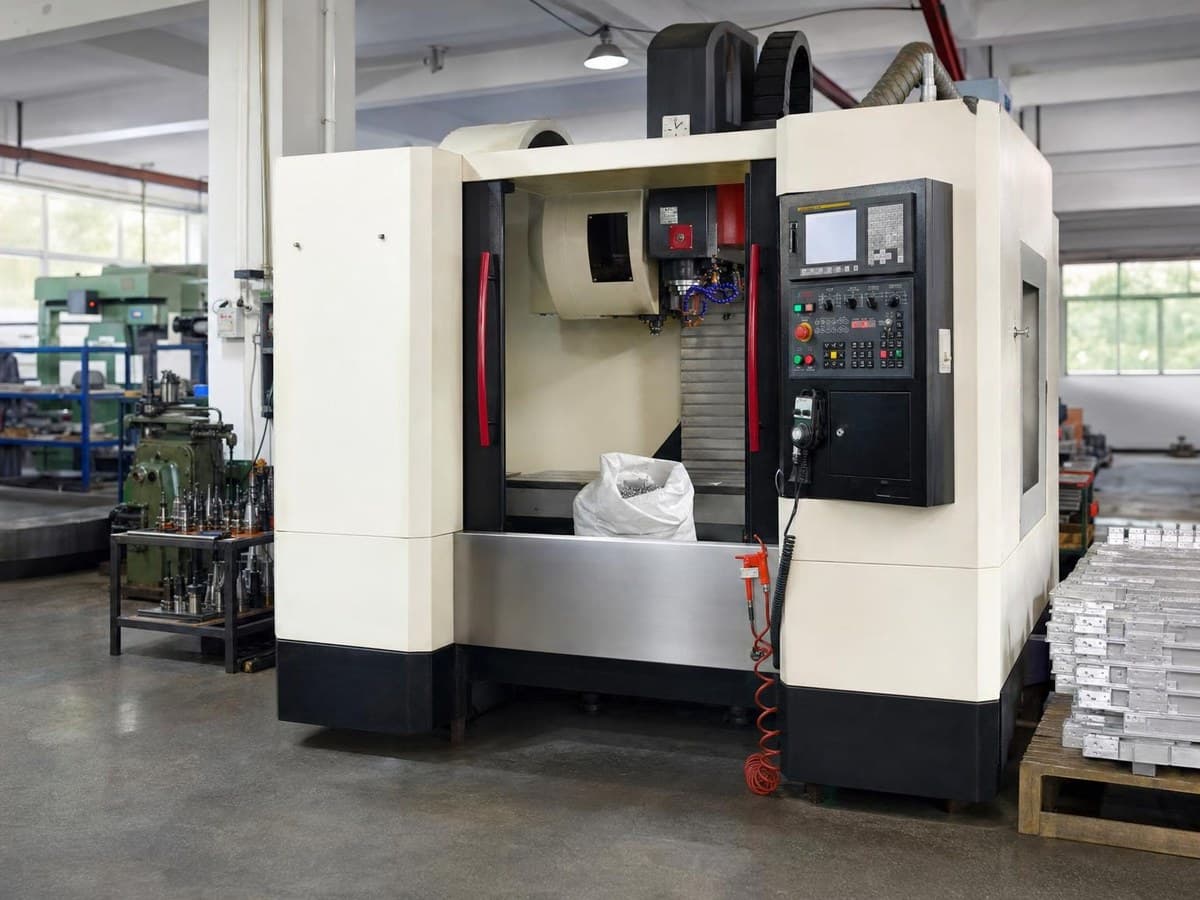
Every Luban mold is designed in-house in CAD, machined on its own CNC equipment and tested on its production line before being cleared for client orders. The tool room runs four medium and two large-format 3-axis CNC centers, plus one large 5-axis machine for complex geometry and high-precision surfaces. Luban states that every mold and every production batch leaves with a dimensional inspection report under its ISO 9001 system, so the tool you approve is the tool your parts are measured against.
After the mold is finished, Luban produces 1-3 samples per design and inspects each for dimensional accuracy, wall-thickness uniformity and surface finish, with a dimensional report and photo documentation. You approve a physical sample, not a render, and production starts only after written sign-off. If a sample deviates from spec, mold adjustments are free. During production, Luban lists ultrasonic wall-thickness measurement, dimensional CMM checks and 100% visual inspection. Approve the finish on the sample with the same care as the dimensions: it becomes the reference for every part that follows.
What should the RFQ say about the finish, and how long does tooling take?
Luban states tooling lead times of 4-6 weeks from approved CAD drawing as standard and 6-8 weeks for complex geometry. Samples follow 1-2 weeks after mold completion, and production takes 3-4 weeks. A finish that is clear in the RFQ keeps that schedule intact, because nothing has to be reworked after machining. As general practice, include the following:
- The finish for each face: sandblasted, textured, Teflon-coated, high-gloss polished or smooth.
- A texture reference or physical sample if a pattern must be matched.
- Logo artwork in vector format, with position, size and raised or recessed.
- A marked-up drawing showing cosmetic faces, functional faces and where a parting line is acceptable.
- Your expected volumes, so the supplier can relate the tool's service life to your production plan.
Send your part for a mold quote
Email a STEP file, drawing, sketch or sample with the finish, logo and cosmetic faces marked. Luban Rotomold returns a preliminary quote within 24-48 hours and sends a CAD file for your approval before any metal is cut.
What surface finishes can a rotomold mold have?
Luban Rotomold lists sandblasted, textured (including automotive-quality patterns), Teflon-coated, high-gloss polished and embossed logo finishes, and its molds page also names a smooth finish. The finish is selected from the end product's visual and functional requirements, so specify it in the RFQ.
How long does a rotomold mold last?
Luban's molds page states a service life of 200,000+ cycles with routine maintenance. Its FAQ attributes dimensional stability to high-grade aluminum, optimized wall-thickness design and reinforced rib structures. How the tool is maintained in production is worth agreeing at quote stage.
Does a CNC-machined mold reduce flash?
Yes. Luban states that machined parting lines mean far less flash than hand-finished tooling, which lowers post-processing cost and improves batch-to-batch consistency. Any remaining trimming is done in-house as CNC trimming.
Is the logo added to the part after molding?
Not when it is embossed. An embossed logo is cut into the mold, so it repeats on every part instead of being added as a secondary operation. On Luban's coolers, logos embossed into the mold weather at the same rate as the shell.
Is every mold tested before production?
Yes. Luban tests each mold on its own production line before clearing it for client orders, and states that every mold receives a dimensional inspection under its ISO 9001 system. Production starts only after you approve a physical sample in writing.
How long does it take to get a mold and samples?
Tooling takes 4-6 weeks from approved CAD drawing as standard, or 6-8 weeks for complex geometry. Luban produces 1-3 samples per design 1-2 weeks after mold completion, and production takes 3-4 weeks after sample approval.